
Mold Remediation in Schenectady, NY: Know the Rules Before the Work Begins
Mold needs moisture, and water damage is one of the most common reasons it shows up. If a leak, flood, or damp basement has left a musty smell or dark patches, the right next step depends on how big the problem is, and New York has rules about who may do the work. Schenectady Restoration Pro explains those rules plainly, helps you deal with the moisture behind the problem, and tells you when a licensed professional is required.
We will not tell you a spot is harmless or dangerous without seeing it, and we do not diagnose health effects. We look, explain, and give a free estimate for the water-related part of the job.
- 24/7 Emergency Calls
- Free Estimates
- Licensed and Insured
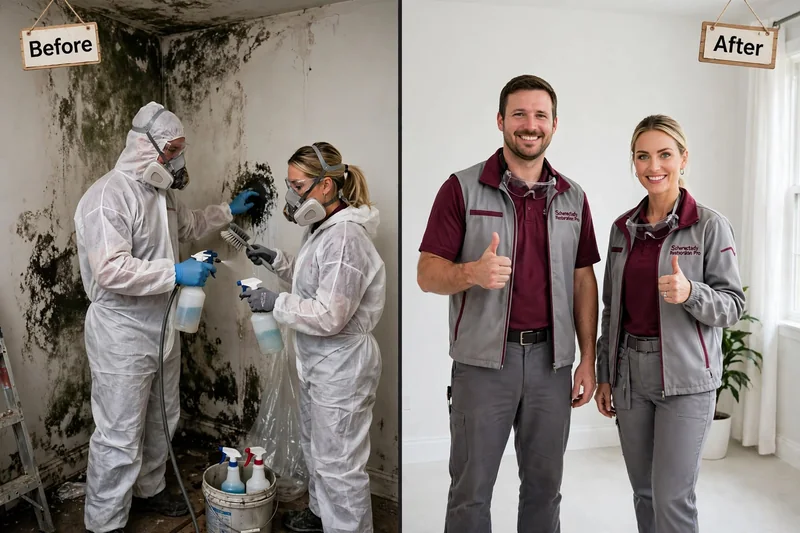
What New York Requires
New York's mold program is run by the State Department of Labor. In general, a mold project covering more than 10 square feet needs two separate licensed professionals: a licensed Mold Assessor, who inspects and writes a Mold Remediation Plan before work starts, and a licensed Mold Remediation Contractor, who carries out that plan. The same licensee may not do both on the same project. A check after the work is also part of the process.
There are exceptions. Owners working on their own property are generally exempt, projects under the 10 square feet threshold do not need a license, and routine cleaning is excluded. Because details can change, you can confirm the current rules and look up a licensed professional through the New York State Department of Labor.
Where Our Work Fits
Fixing the Moisture Problem
Mold will return if the damp conditions stay. Finding and drying wet materials is the part of this work that connects directly to our water services.
Drying After a Water Loss
Quick, thorough drying can reduce the chance of mold taking hold. Structural drying and dehumidification shows how we approach it.
Working With Licensed Professionals
When a project is covered by the state's rules, the assessment and remediation must be done by licensed professionals. We tell you early if your job crosses that line, so you can arrange the right people.
Signs That Mold May Be Present
- A musty odor that lingers or returns
- Spots in black, green, or gray on walls, ceilings, or tucked-away corners
- Peeling paint or wallpaper in damp areas
- Warped baseboards or flooring after a leak
- Fogged windows or sweating pipes in a closed-up room
- Allergy-like symptoms that seem worse indoors (a doctor can advise on health concerns)
Where Mold Tends to Appear After Water Damage
Cellars and Crawl Spaces
Low, cool, closed-in areas stay damp longer. We cover below-grade jobs on our basement water damage page.
Attics and Ceilings
Roof leaks can wet insulation and framing without anyone noticing. The inside effects of those leaks are explained under roof leak water damage.
Behind Walls and Under Floors
Wet drywall, subfloors, and cabinets can hold moisture for a long time after the surface looks dry.
Wet Rooms Around the House
Steam and small leaks around fixtures create steady dampness.
Humidity Targets Worth Knowing
EPA guidance puts indoor humidity under 60 percent, with 30 to 50 percent the ideal range. The agency also advises drying wet materials within a day or two to hold mold back. These are general guides, and the right plan for a specific building depends on what we find.
What to Do If You Think You Have Mold
- Stop the water first. Mold cannot be solved while the leak continues.
- Leave suspected growth alone. Scrubbing or sanding it can send spores into the air.
- Keep the area closed off and limit foot traffic through it.
- Take photos and note when you first saw it.
- Ask for license numbers if a project may exceed the threshold, and verify them with the state.
Not Sure Where the Water Is Coming From?
Mold that keeps coming back may be fed by a leak behind a wall. A visit under water leak detection can follow the moisture to its start.
Mold Help Across Schenectady
Moisture and mold calls reach us from the Stockade, Union College area, Eastern Avenue, Woodlawn, and Goose Hill, and from Scotia, Glenville, Rotterdam, and Niskayuna.