
Basement Water Damage in Schenectady, NY: Restoring the Rooms Below Ground
A basement is the first place water goes and the last place to dry. In Schenectady, where many homes are older and spring snowmelt can arrive fast, a wet basement can be anything from a few damp spots to several inches of water over a finished floor. Schenectady Restoration Pro removes the water, dries the structure, and checks what the water touched, so you know what is safe to keep.
We do not guess what a basement needs before we see it. A walk-through comes first, then the options, then a free estimate.
- 24/7 Emergency Calls
- Free Estimates
- Licensed and Insured
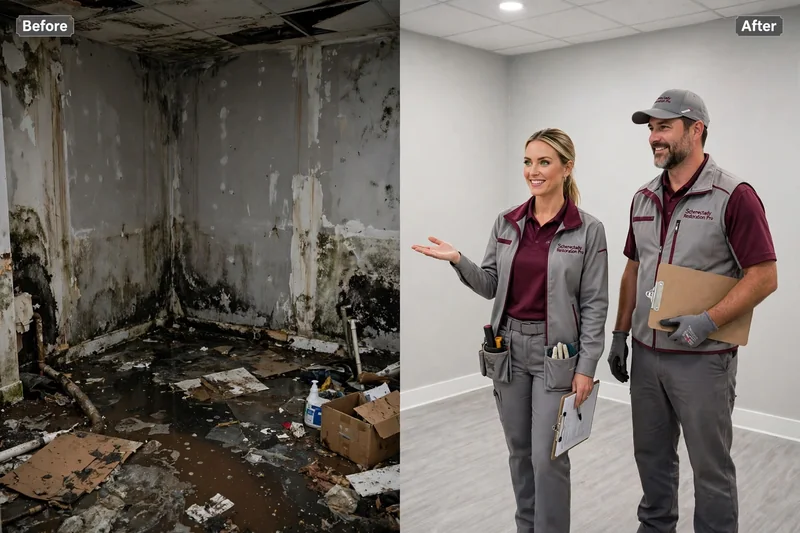
How Water Gets Into a Schenectady Basement
Snowmelt and Heavy Rain
When the ground is frozen or saturated, water has nowhere to go but toward the foundation. It can seep through cracks, joints, and porous block or stone.
A Sump Pump That Fails
A pump can stop because of a power outage, a stuck float, a clogged line, or simply being overwhelmed. Once it stops, the pit overflows quickly.
Plumbing Above and Beside
A split pipe, a washer hose that lets go, or a tank that leaks will send its water to the lowest point in the house.
Floor Drains and Sewer Lines
A backed-up floor drain or a blocked line can push dirty water into the basement. That is a different job, covered by our sewage backup cleanup service.
Before You Head Downstairs
- Treat the basement as an electrical hazard. Do not walk into standing water if outlets, cords, or the panel are nearby.
- Turn off power only if the panel is on dry ground and easy to reach. Otherwise call a professional.
- Do not run a regular shop vacuum in standing water.
- Take pictures of the water line on the walls and on stored items before you move anything.
- Keep children and pets upstairs.
How We Handle a Wet Basement
Check Safety and Find the Source
We confirm power and gas are safe, and identify whether the water is clean, gray, or contaminated, since that changes what comes out and how.
Pump Out the Standing Water
Pumps clear standing water, and extractors take up what soaks into carpet and padding. Read more on our water extraction and removal page.
Dry Concrete, Framing, and Walls
Concrete and block release moisture slowly. Air movers and dehumidifiers run until readings match dry reference materials, as described on our structural drying and dehumidification page.
Clean, Sort, and Plan
We help you decide what to keep and what to discard, and what repairs come next.
What Is in Your Basement Matters
Finished Rooms and Home Offices
Drywall, carpet, and flooring wick water up and hold it. These areas often need the most careful inspection, because moisture hides behind finished walls.
Laundry and Mechanical Areas
Furnaces, water heaters, and washers sit on concrete and can be affected by standing water. We note any wet equipment and suggest the right trade to check it.
Storage Areas
Boxes, books, and fabric soak up water quickly. We help you sort what can dry from what cannot.
Rental Units and Shared Spaces
When a basement belongs to a tenant, a landlord, or a building, we document what was wet and what was done, so everyone has the same record.
Keep or Discard: How We Decide
Concrete, masonry, and solid wood can often be dried. Wet carpet padding, soaked insulation, and softened drywall are commonly removed, especially after contaminated water. We tell you which is which after we inspect.
When the Basement Smells Musty
A basement that stays damp can grow mold. If you see or smell it, or if materials have stayed wet, our mold remediation page explains how New York's licensing rules affect larger projects.
Lowering the Chance of a Repeat
We do not repair foundations or drainage, but we can point you toward what to ask a qualified contractor to look at: gutters and downspouts, ground slope near the house, cracks, and the sump pump and its power backup. A dry basement is easier to keep dry with a plan.
Basement Help Across Schenectady
Our basement jobs span the Stockade, Bellevue, Mont Pleasant, Hamilton Hill, Eastern Avenue, and Downtown, plus Scotia, Glenville, Rotterdam, and Niskayuna.